Tiles are more than just practical – with thoughtful tile design and a smart texture mix you can transform rooms into visually rich, sophisticated spaces. In this post, we’ll walk you through how to combine tile types, finishes, sizes and patterns so your interiors feel modern, cohesive, and stylish.
Start with a Clear Design Vision
Before you choose any tile, define your overall interior styling concept. Are you aiming for a spa-like calm, minimalist modern elegance, rustic warmth, or bold personality? A clear vision helps you choose a consistent color palette (two to four colors at most), which in turn serves as the foundation for every tile decision – from finish and texture to accent placement. Neutral base tones such as whites, beiges, or soft grays often provide a balanced, versatile background. Once you have that base, you can introduce one or two accent textures or tones for the character. This approach helps prevent visual clutter and ensures that mixed textures and patterns work together harmoniously with cabinets, fixtures, lighting, and overall décor.
Layer Textures to Add Depth and Dimension
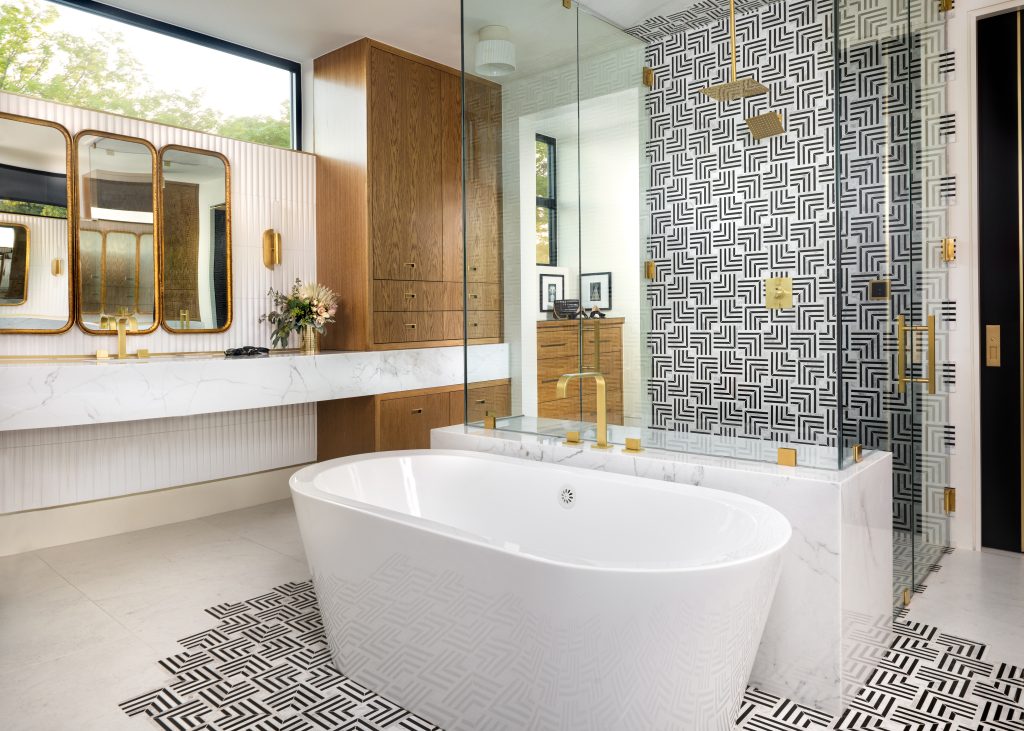
Texture adds dimension to flat surfaces. Combining smooth and glossy tile finishes with matte or stone-look tiles can make a space feel layered and dynamic. For instance, pairing matte floor tiles with glossy wall tiles can create contrast – the matte surface adds a grounded, organic feel, while glossy tiles reflect light, making the room brighter and more spacious. Alternatively, blending natural-stone textures with modern porcelain tiles helps balance rustic charm and contemporary elegance. The contrast between raw, tactile textures and polished surfaces brings richness to kitchens, bathrooms, or feature walls – and supports a refined, modern interiors aesthetic. Designers often recommend using a dominant texture and adding one or two contrasting textures as accents, ensuring a coherent texture mix.
Work with Tile Sizes, Shapes, and Pattern Combinations
Incorporating variety in tile size and layout plays a key role in pattern combination. Large-format tiles (for example, 24″×24″) with minimal grout lines help a room feel spacious and calm. In contrast, smaller-scale tiles – mosaics, hexagons, subway tiles – can be used as detailing or accents to add visual interest. The most effective designs avoid overwhelming the space: one dominant tile pattern or texture for most of the room, a secondary tile to support the main style, and a small amount of accent tiles to bring character. This kind of hierarchy in pattern combination helps the space feel balanced. It’s also important to consider how tiles are laid – straight grid, herringbone, diagonal, or other creative patterns – since layout affects rhythm, flow, and perceived proportions.
Harmonize Color, Texture, and Grout
Even with a smart mix of textures and patterns, cohesion can be lost if colors or grout are inconsistent. It’s wise to maintain consistent undertones across different tiles – for example, pairing warm beige with complementary warm-toned tiles rather than mixing warm with cold grays indiscriminately. Grout color also makes a difference: a grout close in shade to the tile creates a seamless, unified surface, whereas a contrasting grout emphasizes tile lines and patterns, which can be dramatic but risks a busier look. When tile design, texture mix, and grout color are chosen in concert – all tied to the same palette and mood – the result feels intentional and polished.
Use Accent Tiles and Feature Areas Thoughtfully
Accent tiles and textured zones are extremely powerful when used with purpose. A decorative mosaic backsplash behind a sink, a textured tile wall around a fireplace, or a feature strip in a shower niche can draw attention and add personality. In such cases, the rest of the surfaces should remain relatively simple and neutral – letting accent tiles serve as visual anchors rather than competing for attention. This approach ensures balance and prevents the design from becoming overwhelming. Well-designed accent zones help define functional areas (kitchens, baths, entryways) and give character to the overall interior styling.
Balance Style with Practicality and Sustainability
A beautiful tile mix should also be practical. In high-traffic or wet areas (bathrooms, kitchens, entryways), choose durable materials such as porcelain or high-fired ceramics that resist moisture, staining, and wear. Textured or matte finishes can help prevent slipping and hide water spots or dirt better than highly glossy surfaces. For homeowners interested in eco-conscious design, many tile producers now offer sustainable tiles – recycled-content porcelain or ceramic, low-VOC glazes, and responsible manufacturing processes. By using a thoughtful texture mix with durable and sustainable materials, you can get a design that looks great – and stands the test of time.
Always Test Combinations Before Committing
Even the best-planned tile mix can look different under real-world conditions. That’s why it’s wise to order samples of your main tile, secondary tile, and accent tile – then lay them out together in your actual room environment. Observe how they look under natural and artificial light, against cabinetry, countertops, and with fixtures. Sometimes colors shift, textures read darker or lighter, grout shade shows up differently once tiled. Mood boards or sample boards help you visualize and catch mismatches early. This step saves time and money – and ensures that your intended pattern combination and texture mix will truly deliver the modern interiors look you envisioned.
When mixing tiles and textures, the goal shouldn’t be to showcase every option available – but to blend cohesion with contrast. A well-executed tile design with balanced texture mix, carefully chosen pattern combination, and thoughtfully placed accent tiles can make any space feel modern, elegant, and personalized. Whether you are remodeling a bathroom, kitchen, or living area – thoughtful tile design and texture mix will help you achieve a space that feels both beautiful and functional.
Eco Seattle Cleaners empowers Seattle homeowners with practical, eco-conscious remodeling advice. From water-saving fixtures to sustainable materials and green bathroom ideas, we’re here to help you create a home that’s efficient, beautiful, and environmentally safe. Stay tuned for more guides on eco-friendly renovations, smart remodeling tips, and sustainable home design.